Every Animal Deserves a Second Chance

urAdopt connects shelters, rescues, and responsible rehomers with welfare-screened applicants. Zero-profit placement, welfare-first screening, and transparent records for every animal in your care.

How It Works

Three steps from intake to placement — with welfare screening built into every stage.

1

List

Create a detailed animal profile with health records, behavioral notes, and species-specific descriptors. Guided intake forms ensure complete documentation from day one.

2

Screen

Applicants complete welfare questionnaires and a reusable adopter profile — housing, household, experience and veterinary reference — reviewed by your team before any placement.

3

Place

Approve a match, transfer medical records, generate the placement agreement, and schedule post-adoption follow-ups — all in one coordinated workflow.

Built for Every Placement Organization

Whether you run a municipal shelter, a breed-specific rescue, or you are an individual rehoming a pet, urAdopt adapts to your workflow.

Shelters

Intake and Inventory Management

Track every animal from intake through placement with a complete audit trail. Manage hold periods, stray timelines, and owner reclaim windows without spreadsheets.

  • Digital intake forms with photo documentation
  • Foster coordination and placement queue management
  • Adoption tracking with a Shelter Animals Count (SAC) export
  • Volunteer and staff task assignment
Rescues

Cross-Posting and Transfer Coordination

Multi-channel exposure without the manual effort. Coordinate medical transfers, transport logistics, and out-of-state placements through a shared network.

  • Medical record transfer to receiving vet or adopter
  • Transport runs: assign drivers, track each animal’s paperwork and health certificate, and follow the run from planned to in transit to arrived; at a partner shelter the animal moves into their care when they accept the transfer
  • Cross-rescue collaboration for hard-to-place animals
  • Donor and grant reporting tools Planned
Rehomers

Guided Zero-Profit Rehoming

Individuals rehoming a pet receive a structured, welfare-first process. The platform enforces that an individual may ask only for receipted vet bills from the 45 days before the adoption.

  • Step-by-step guided rehoming workflow
  • Adoption fee capped at receipted vet bills from the last 45 days
  • Welfare screening questions for every applicant
  • Complete record transfer to the new owner on placement

Trust and Safety by Design

Every placement mechanism is built to protect animals first. These safeguards are structural — not optional features.

Structured Screening

Every applicant answers welfare questionnaires against the organization’s stated requirements, and the application record keeps the full history for review.

Placement Agreements

Generate the placement agreement, capture both signatures electronically, and finalize with a recorded stewardship transfer — a permanent audit trail for every adoption.

Post-Adoption Follow-Ups In progress

Automated 30, 90, and 365-day check-in requests keep the placement record current and surface welfare concerns early, with escalation paths when needed.

Adoption-Fee Limits

A private owner may ask only for receipted vet bills from the 45 days before the adoption; a verified non-profit organization sets its own fee; any other seller may not ask more than its documented costs. The limit is checked when the fee is set and again at payment, and urSynergy takes no profit on rehoming, recovering only the cost of card processing.

Shelter Tools on a Phone

Live screens from a demonstration shelter, captured on a phone. Each one is a feature shelter staff can use today.

My work

One list per person of what to do next, ordered by the role they hold at your shelter.
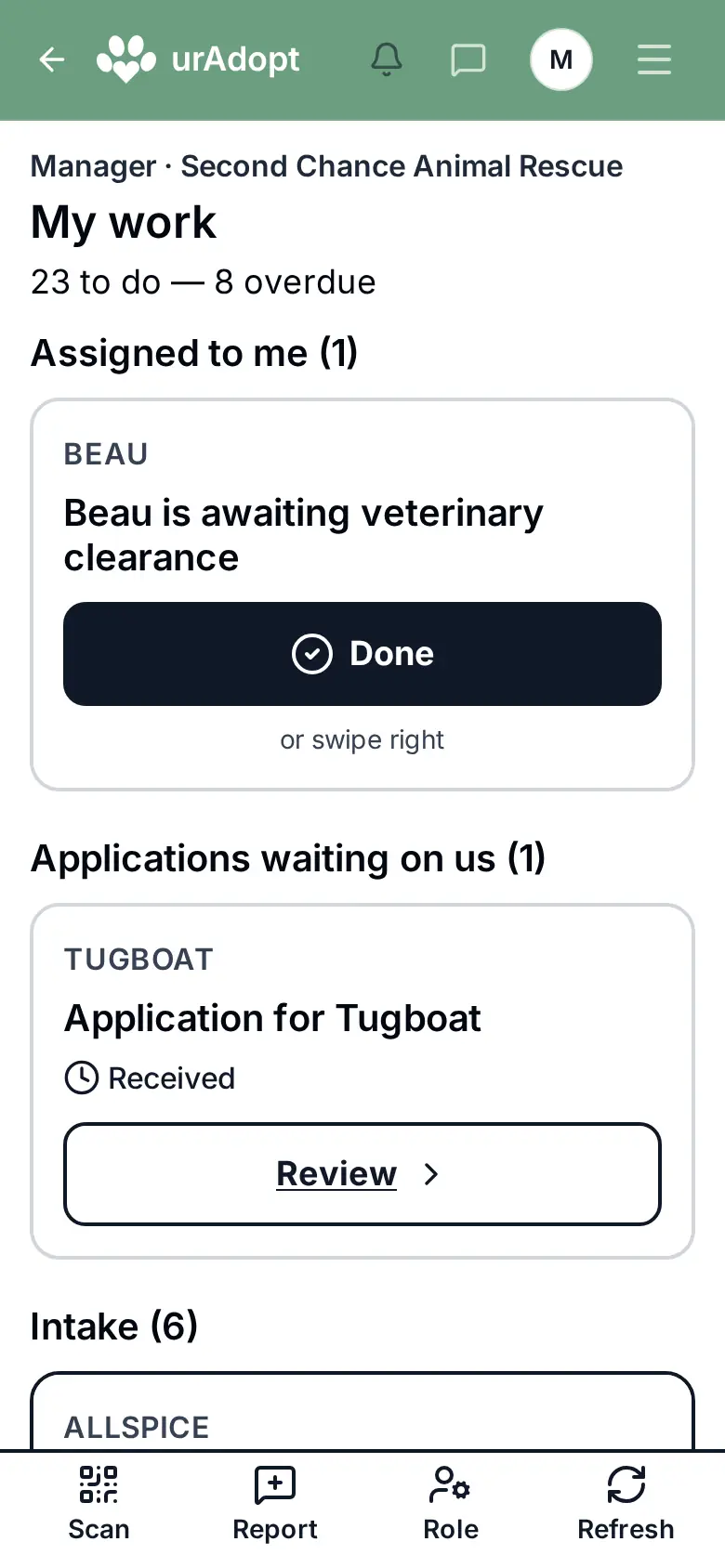
My work on a phone for a shelter manager: 23 to do, a task for Beau and an application for Tugboat to review.
Manager: tasks assigned to me and applications waiting on the shelter.
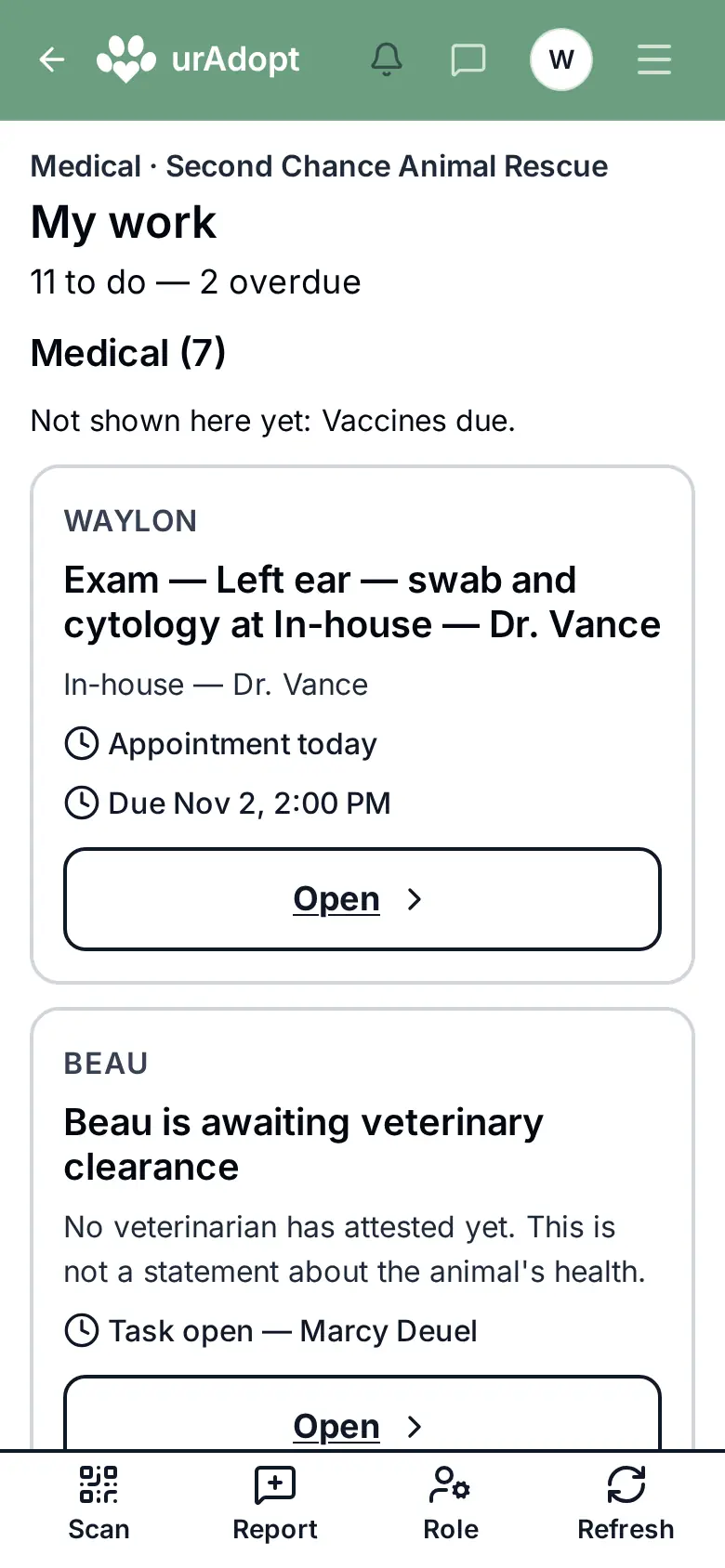
My work for a veterinary technician: an ear exam for Waylon today and Beau awaiting veterinary clearance.
Medical team: today’s appointments and animals awaiting veterinary clearance.
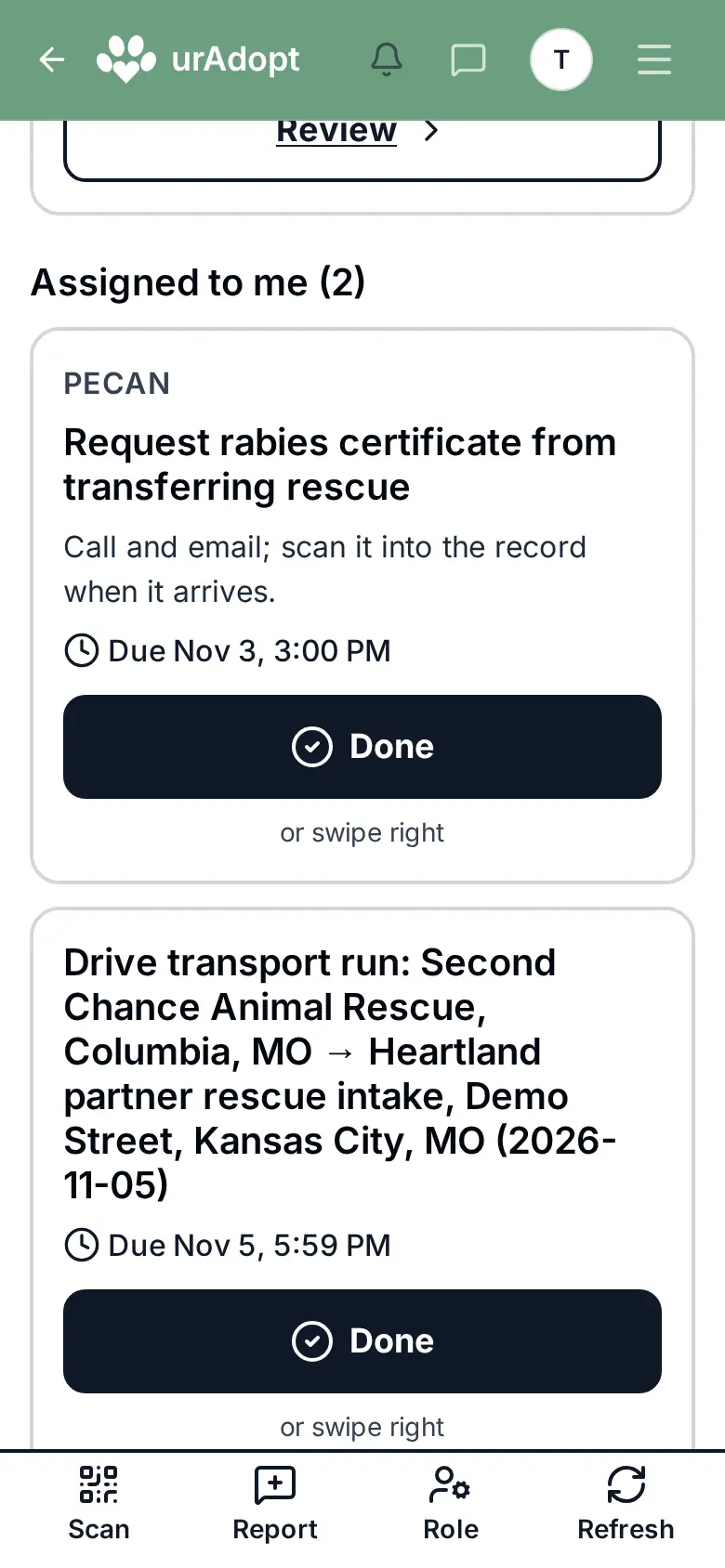
My work showing tasks assigned to a staff member, including driving a transport run to Kansas City on November 5.
Driver: the transport run assigned to them, with its date.
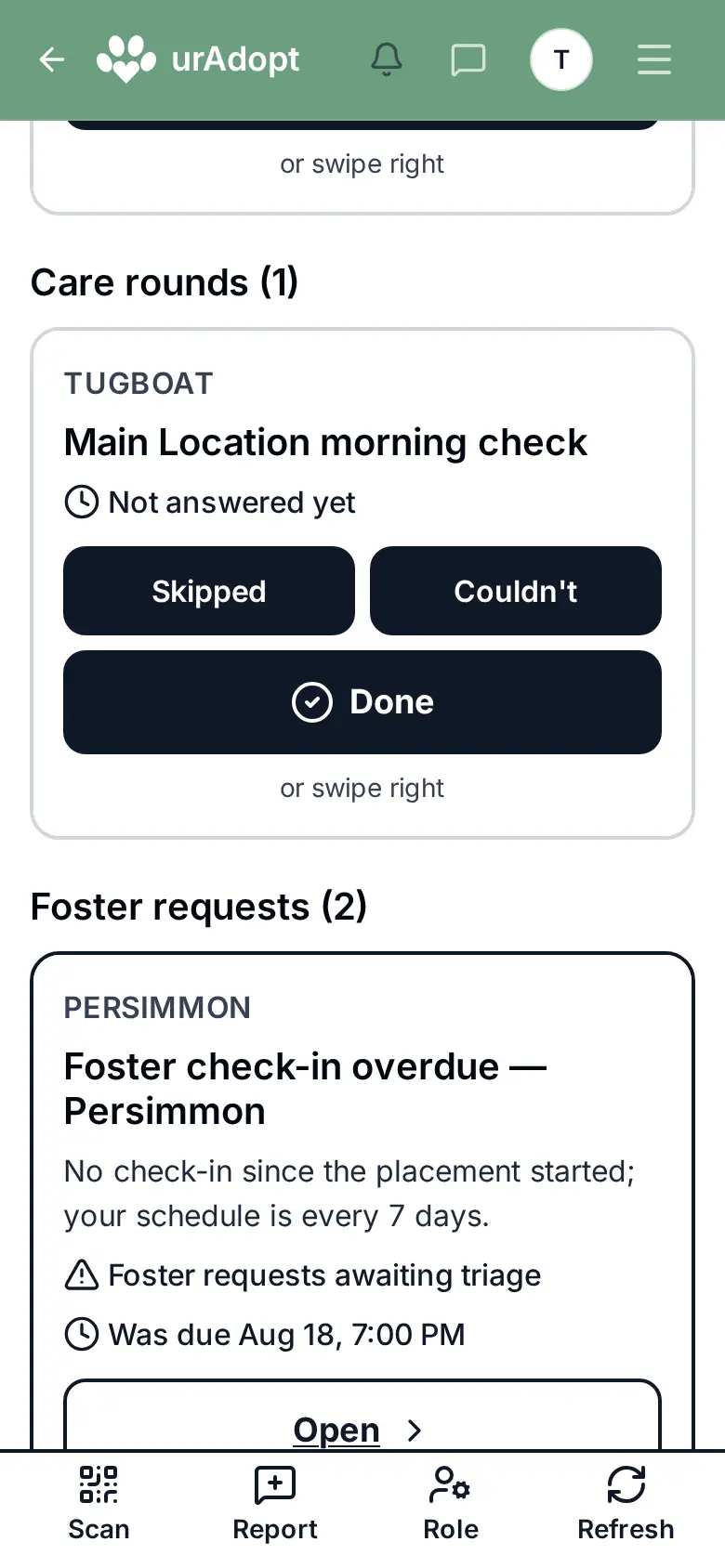
My work showing a care-rounds check for Tugboat with Done, Skipped and Couldn’t buttons, and foster requests below.
Care rounds: answer each check with Done, Skipped or Couldn’t.
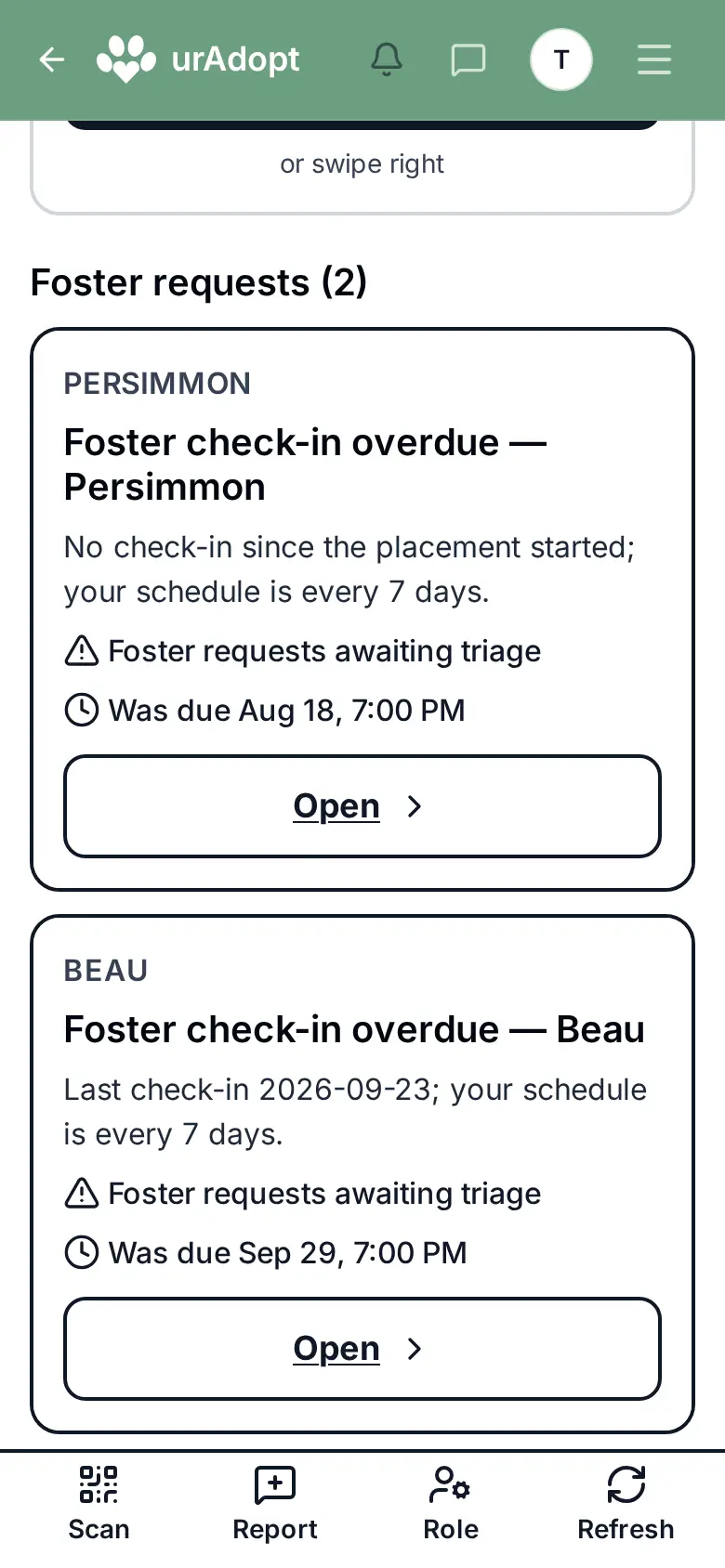
My work listing two overdue foster check-ins, for Persimmon and Beau, against a seven-day schedule.
Foster coordination: overdue foster check-ins against your schedule.

Holds, stages and next action

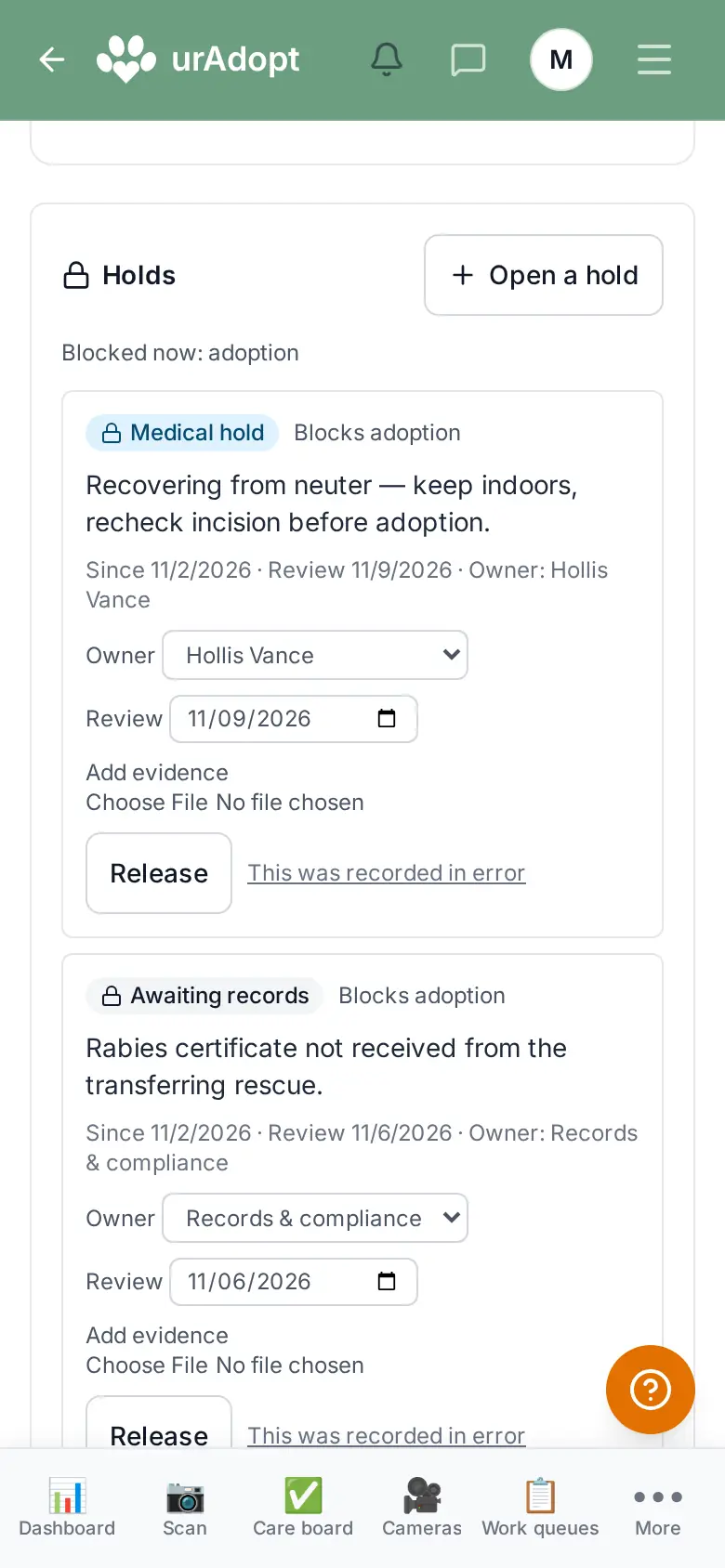
Each animal shows its workflow stage, the holds that block adoption, and the next thing that has to happen.
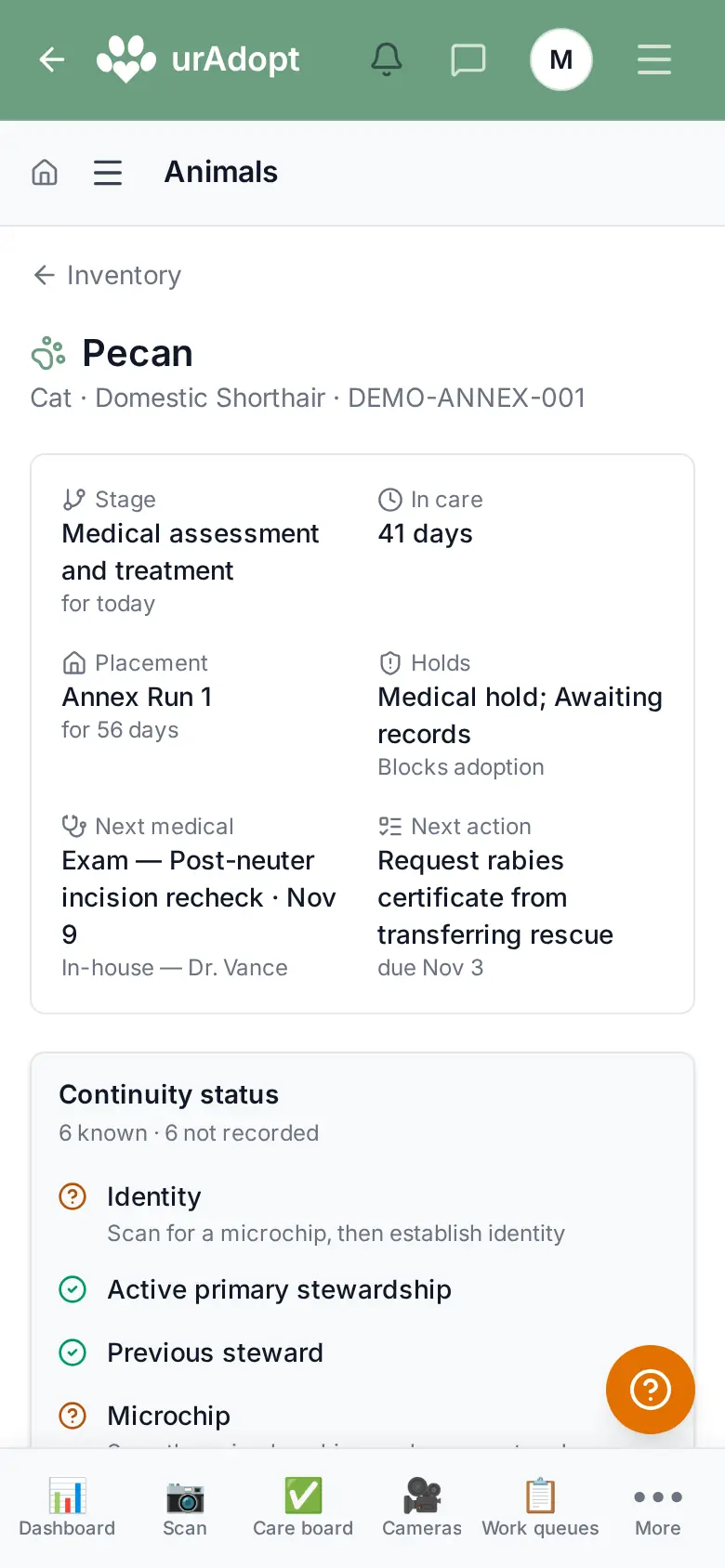
Animal record for Pecan showing stage Medical assessment, two holds blocking adoption, a recheck on November 9 and the next task.
At a glance: stage, time in care, placement, holds, next medical and next action.
Holds panel for Pecan: a medical hold owned by Hollis Vance and an awaiting-records hold, each blocking adoption with a review date.
Holds name what they block, who owns them and when they are reviewed.
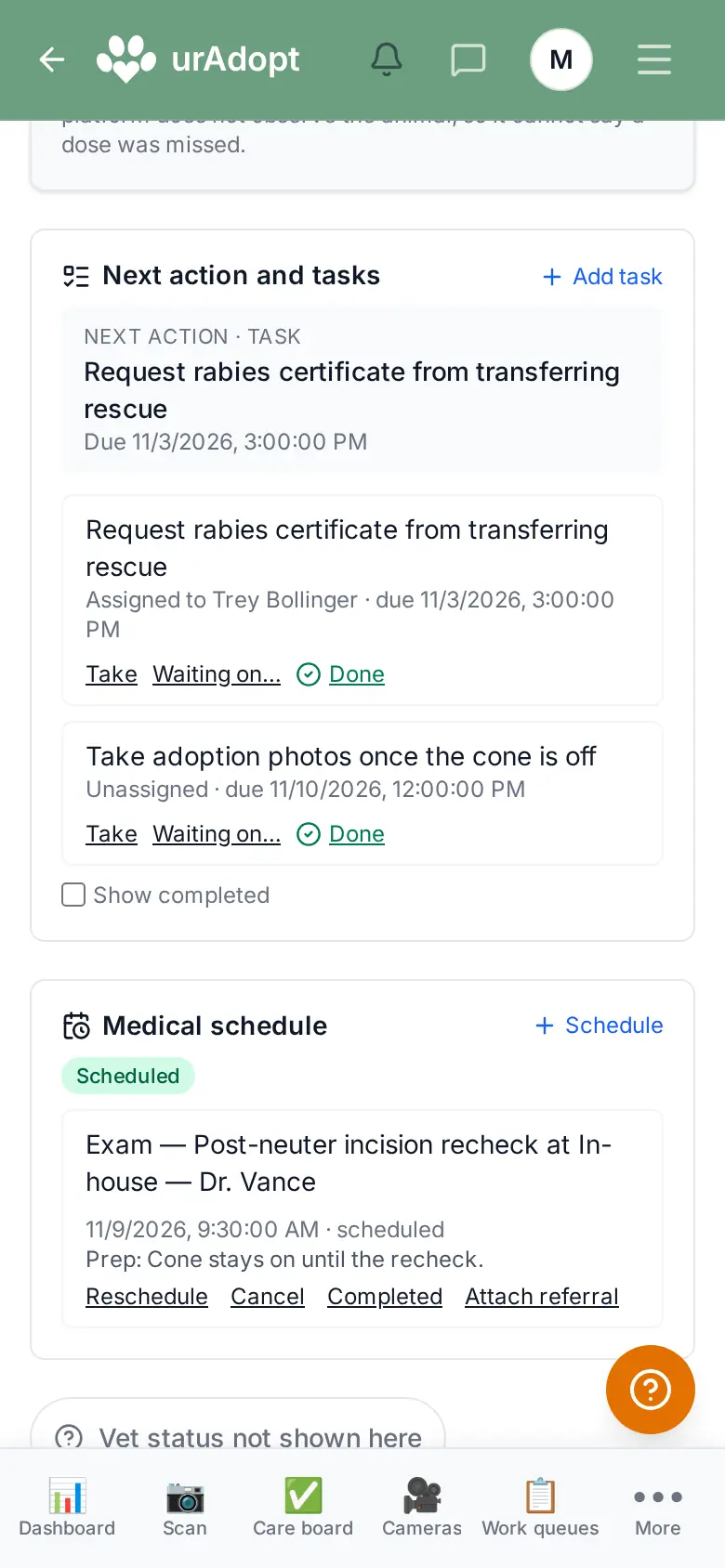
Next action and tasks for Pecan: request a rabies certificate, assigned to Trey Bollinger, and a scheduled incision recheck.
Tasks and the medical schedule on the same record.

Transport runs

Plan a run, assign drivers, and check off each animal’s paperwork before it leaves.
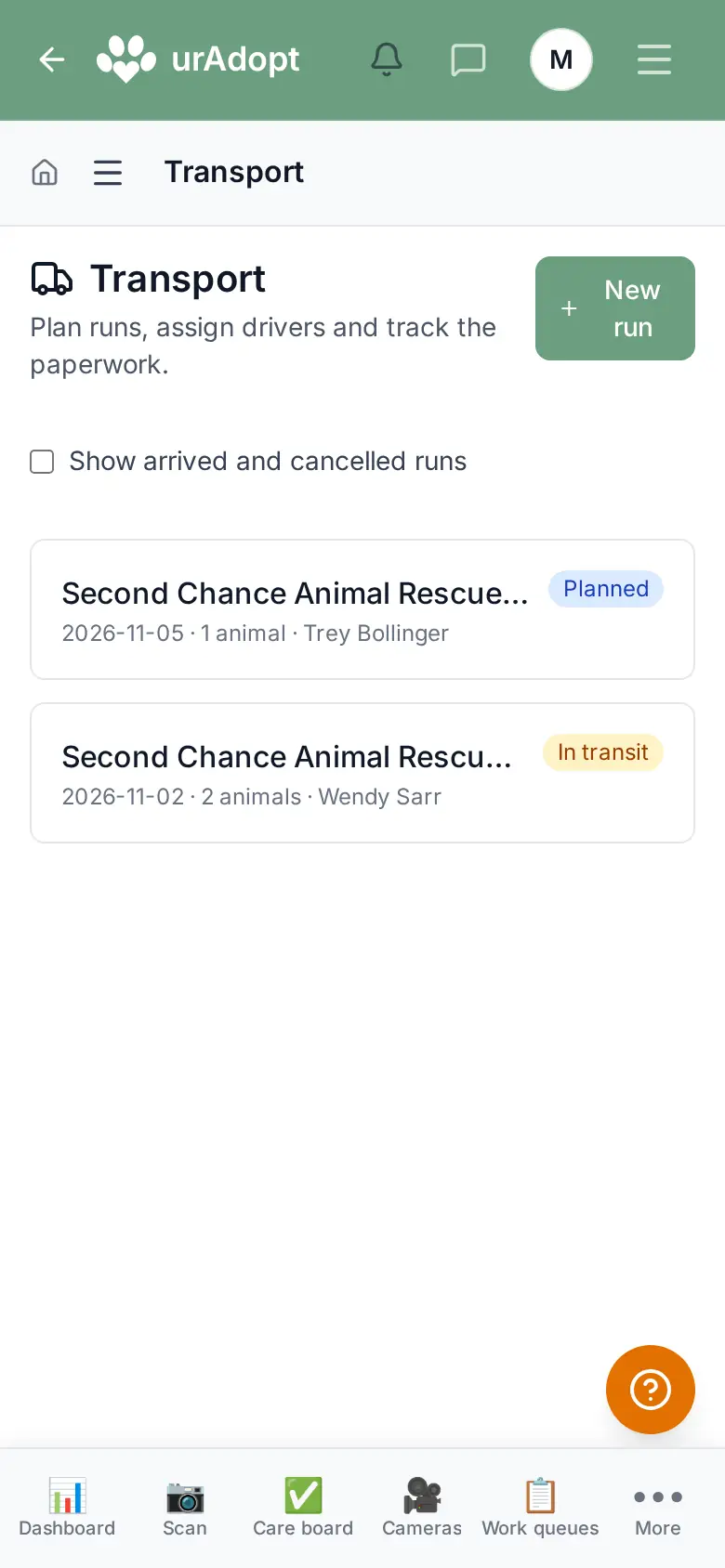
Transport list with a planned run on November 5 driven by Trey Bollinger and a run in transit driven by Wendy Sarr.
Runs with their date, animal count, driver and status.
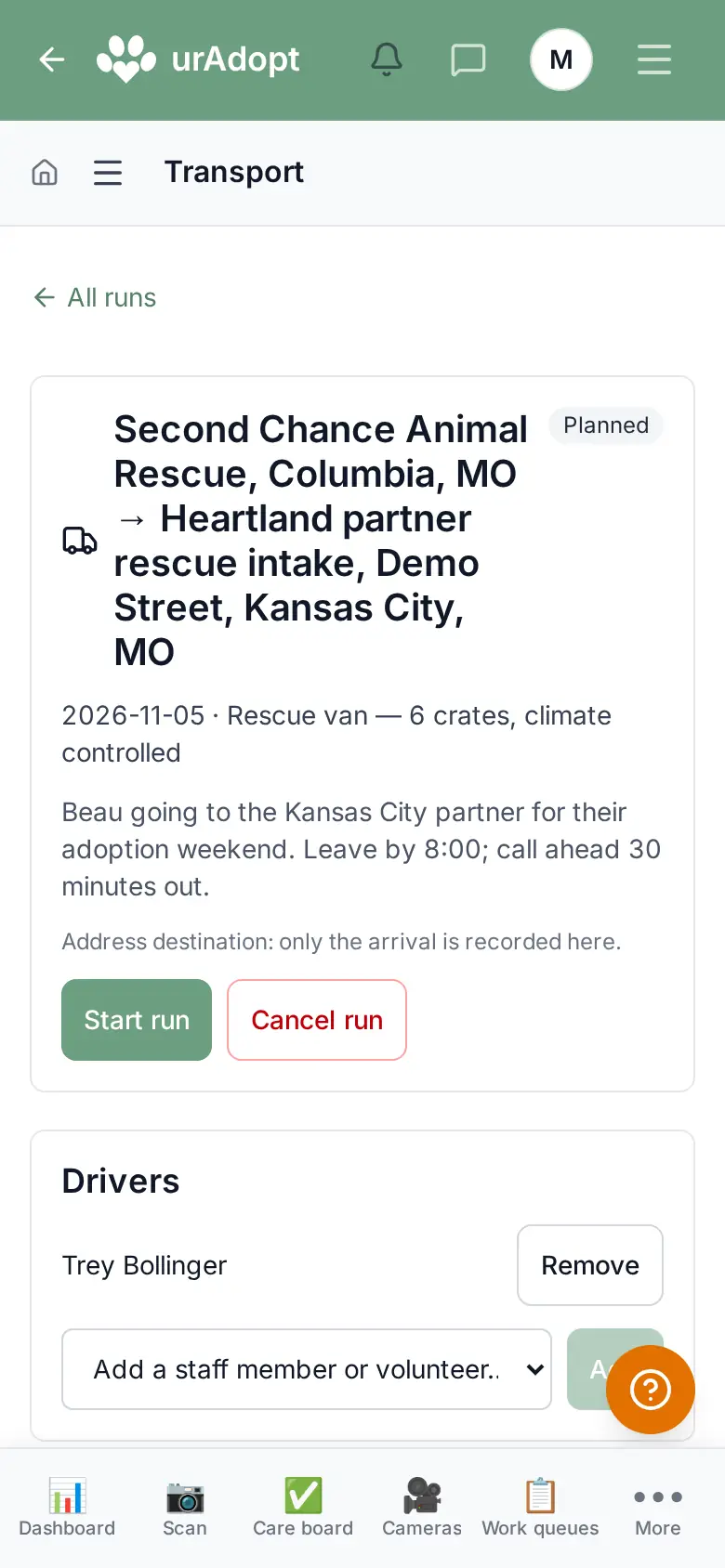
A planned transport run from Columbia to a Kansas City partner rescue, with vehicle notes and Trey Bollinger as driver.
A run: route, vehicle, notes and drivers.
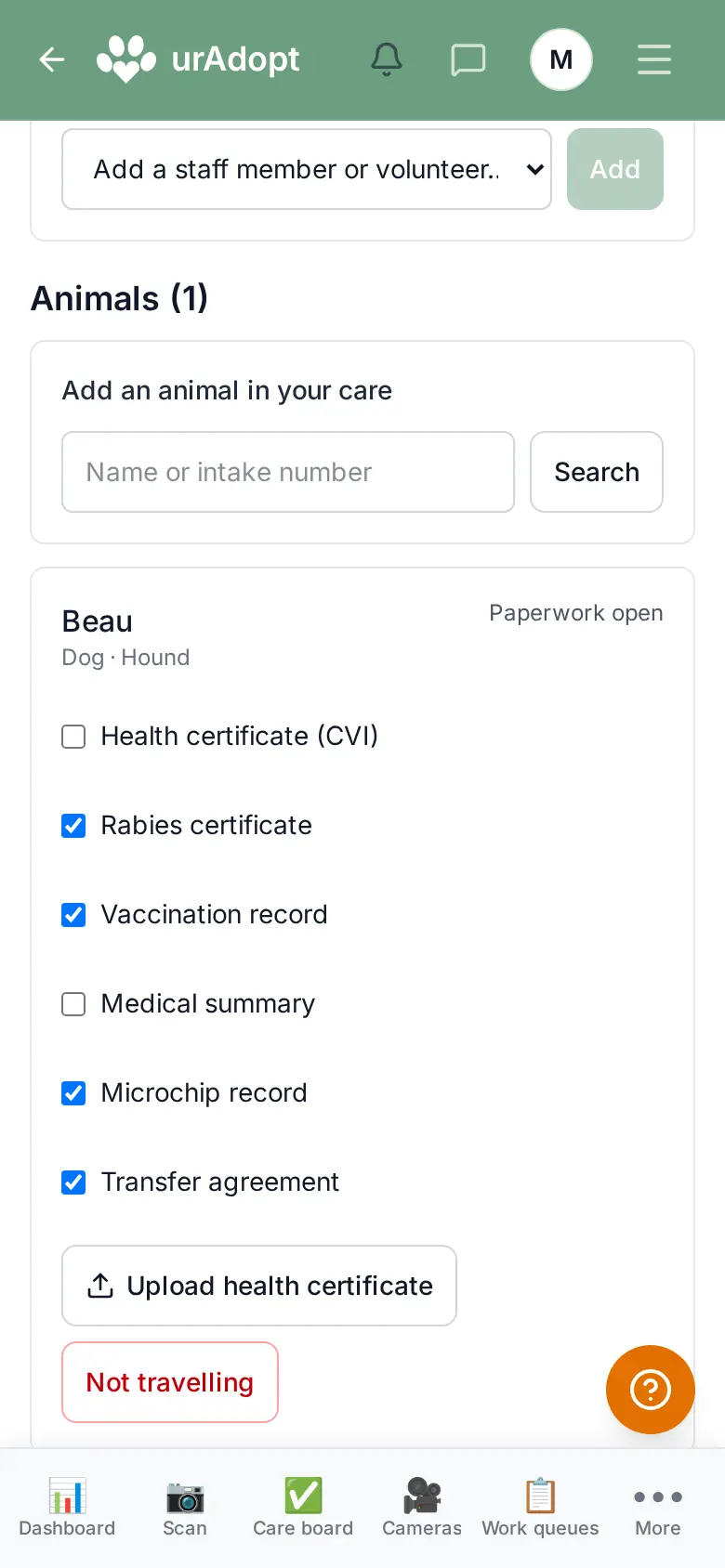
Paperwork checklist for Beau on a transport run, with four of six documents ticked and a health-certificate upload button.
Paperwork per animal: health certificate, rabies, vaccines, microchip, transfer agreement.

Surrender help

A public form for people thinking of surrendering, your local help listed first, and a queue for staff to follow up.
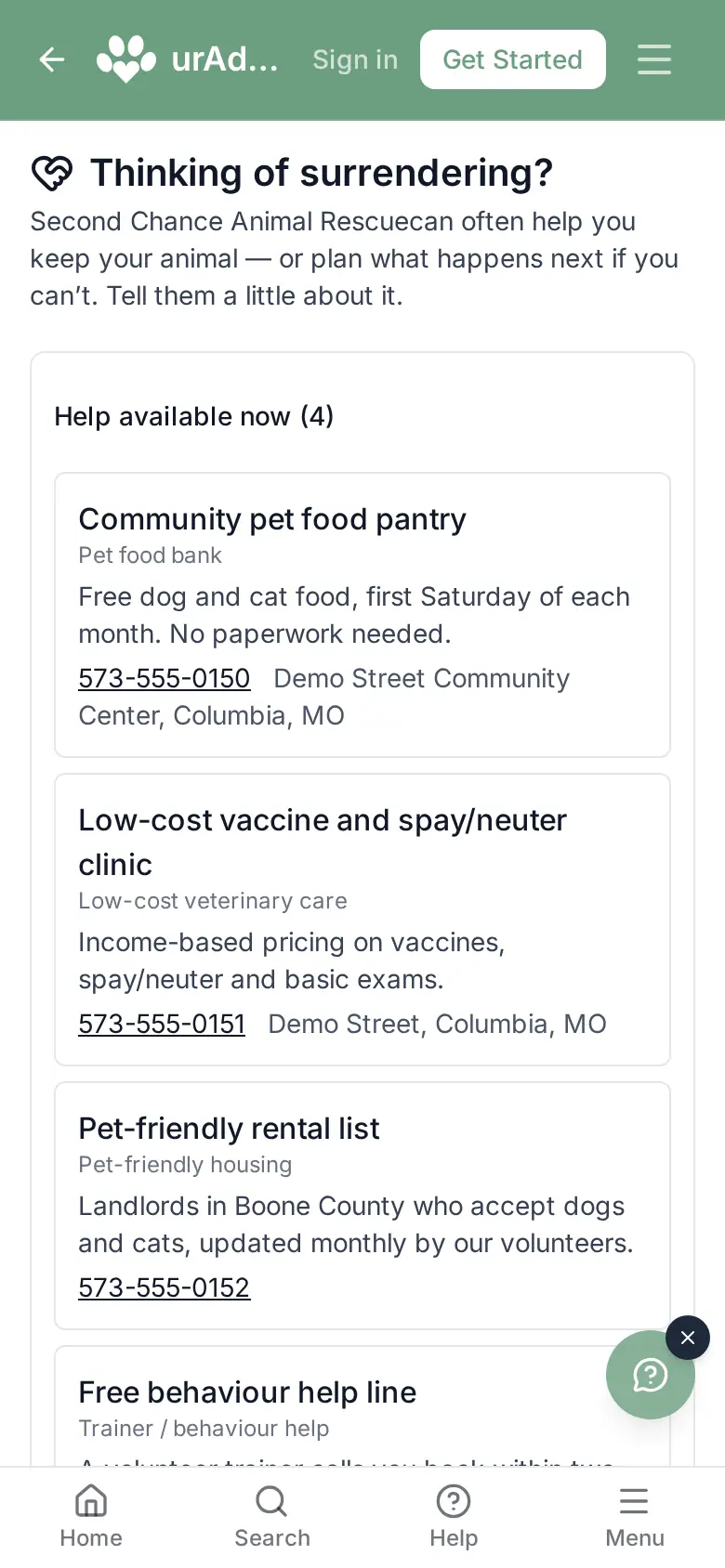
Public surrender help page listing a pet food pantry, a low-cost vaccine clinic and a pet-friendly rental list.
The public form opens with the help your shelter lists.
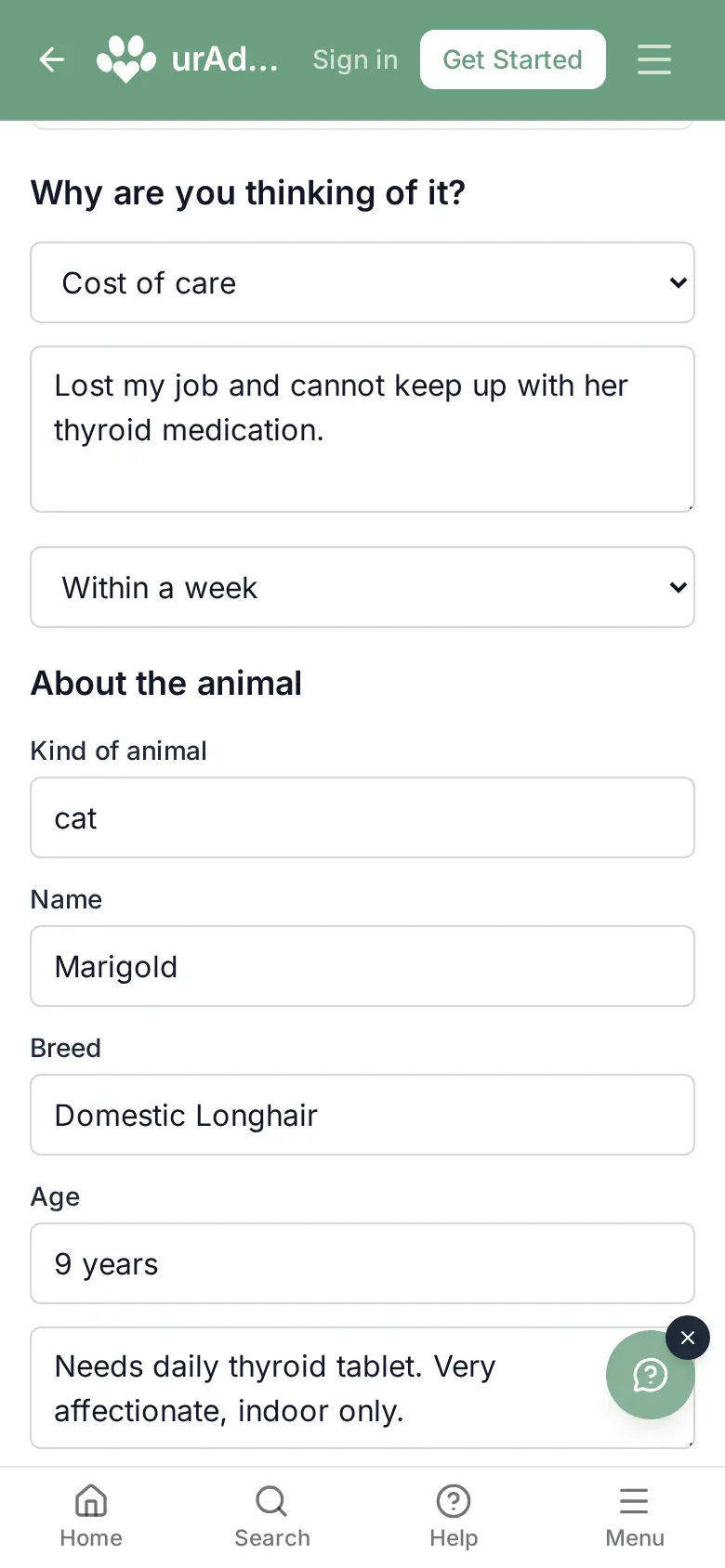
Public surrender form filled in: cost of care, within a week, a nine-year-old cat named Marigold.
The person says why, how soon, and about the animal.
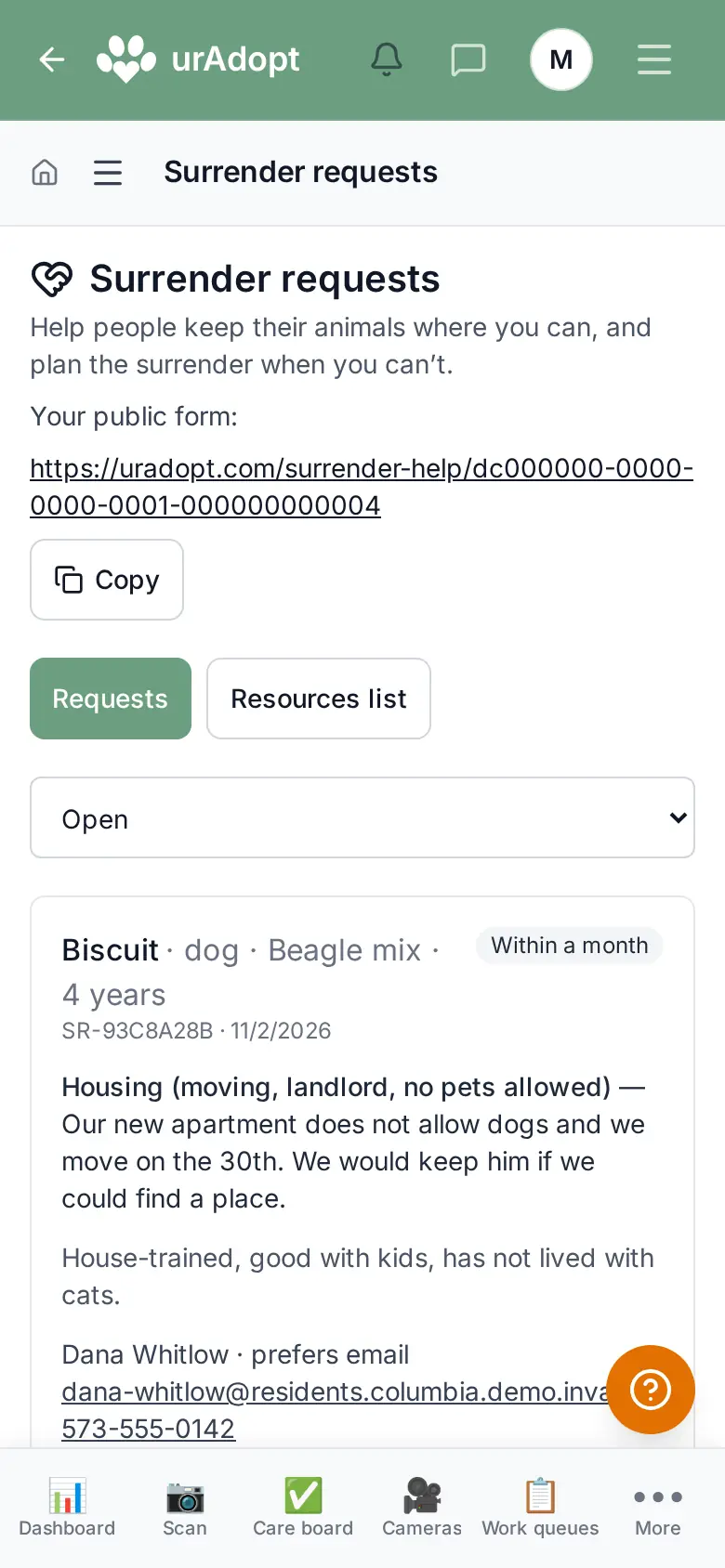
Staff surrender request queue showing a request for Biscuit, a beagle mix, because of housing, within a month.
Staff see each request with its reason, urgency and how to reach the person.

Litters born in care

Record how many were born; each newborn gets its own record with the mother attached and the father recorded as unknown.
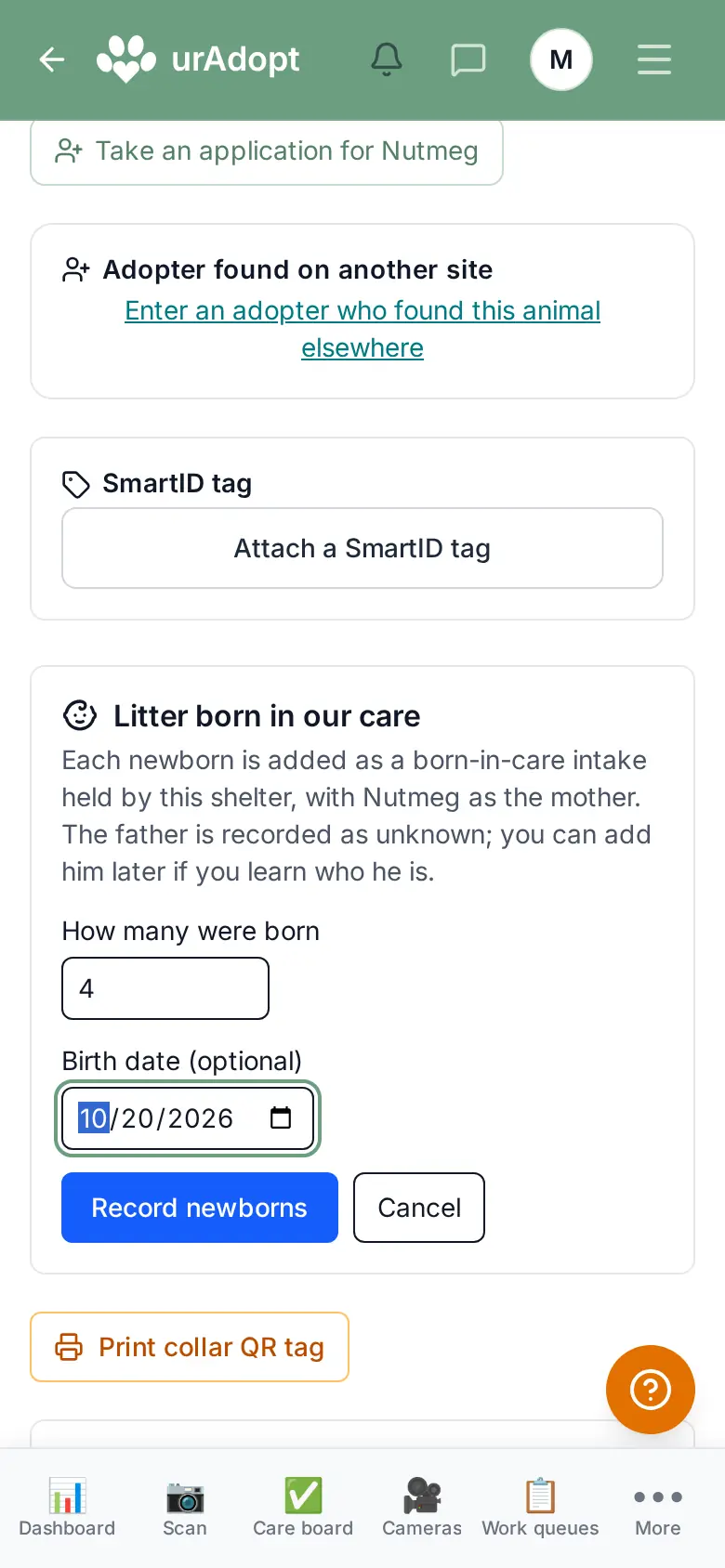
Litter born in our care panel on Nutmeg’s record with four newborns and a birth date of October 20, 2026 entered.
Recording a litter of four on the mother’s record.

Your shelter’s policies

Choose which roles do what. Each choice starts at a default, and every change records who made it and when.
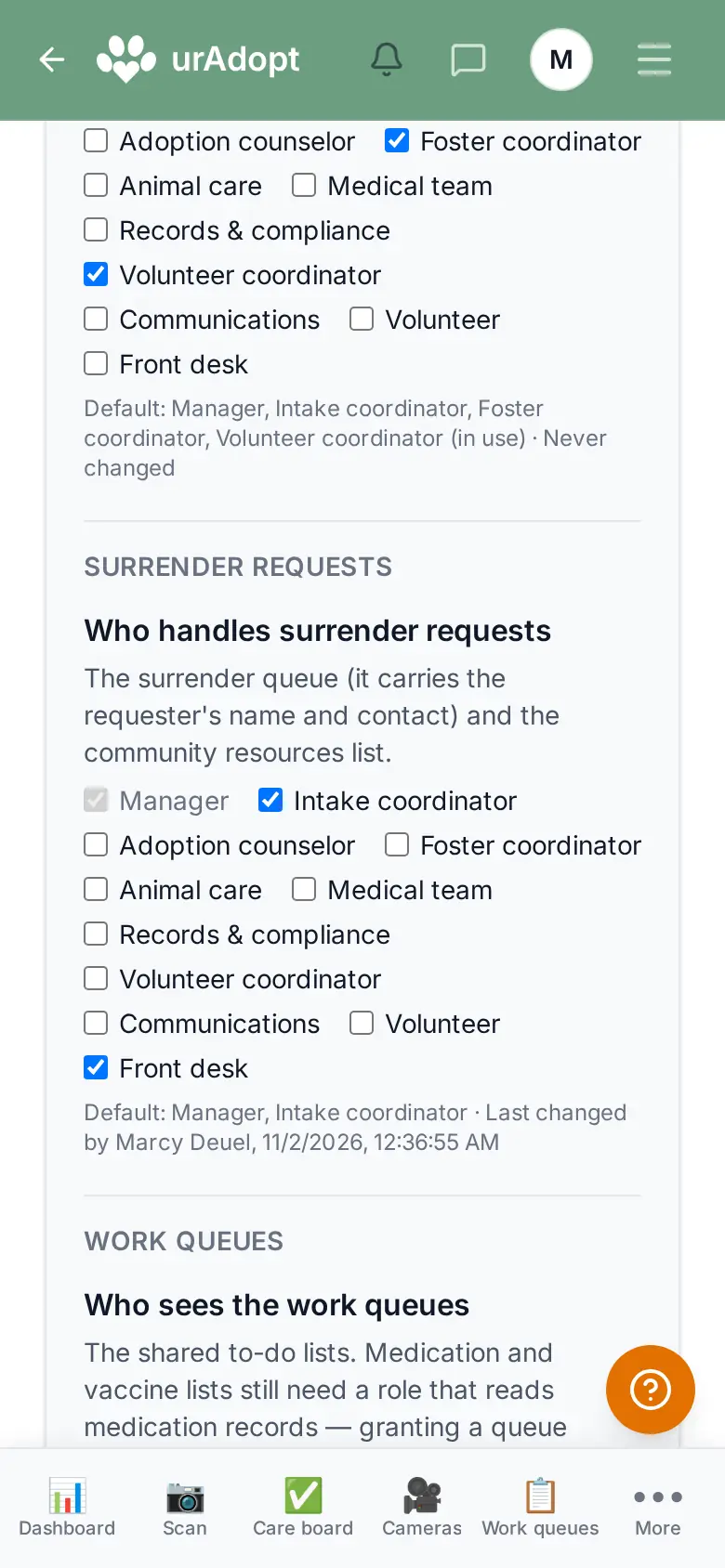
Policies settings: role checkboxes for who manages transport and who handles surrender requests, with the last change recorded.
Who handles surrender requests, changed from the default, with the change recorded.

Export and API access

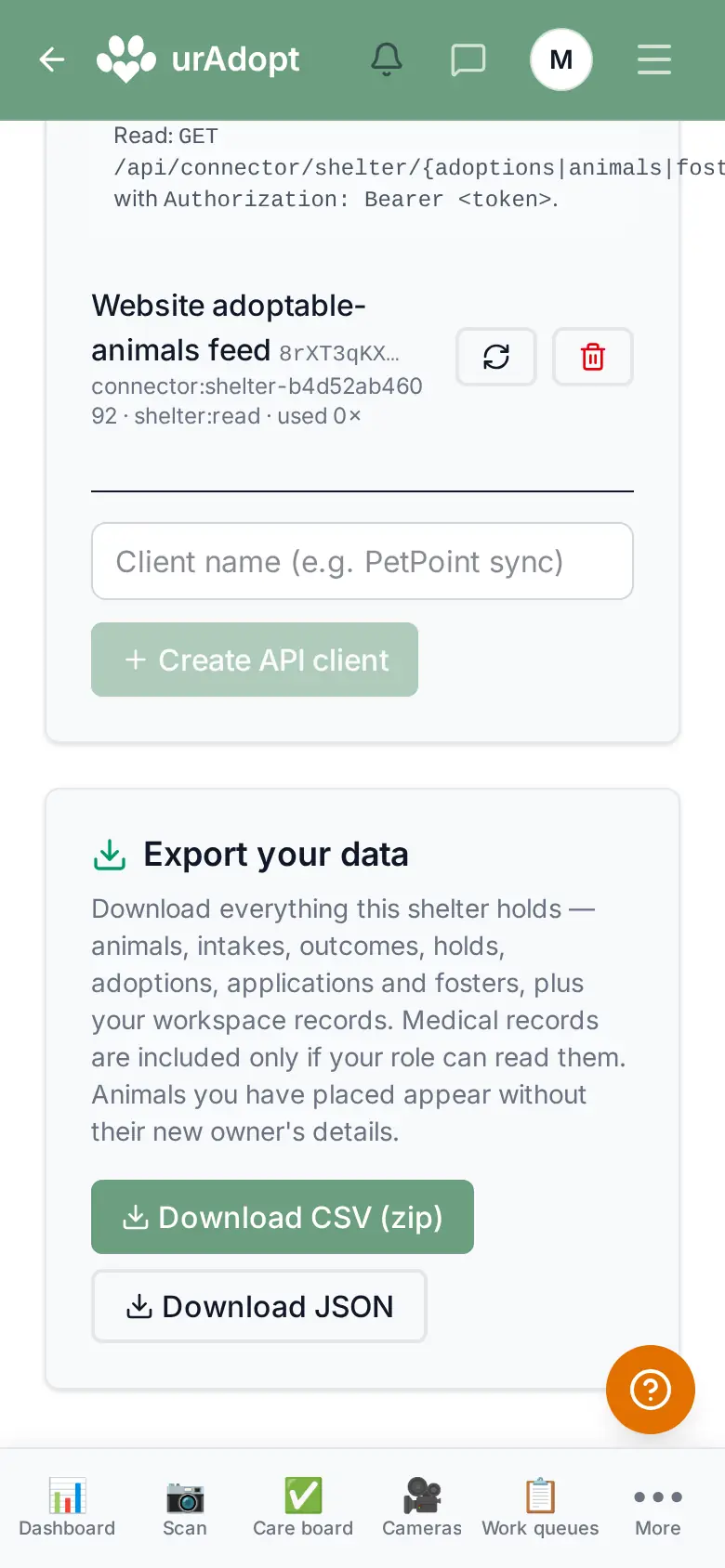
Download your shelter’s data, or give your own system read-only API access.
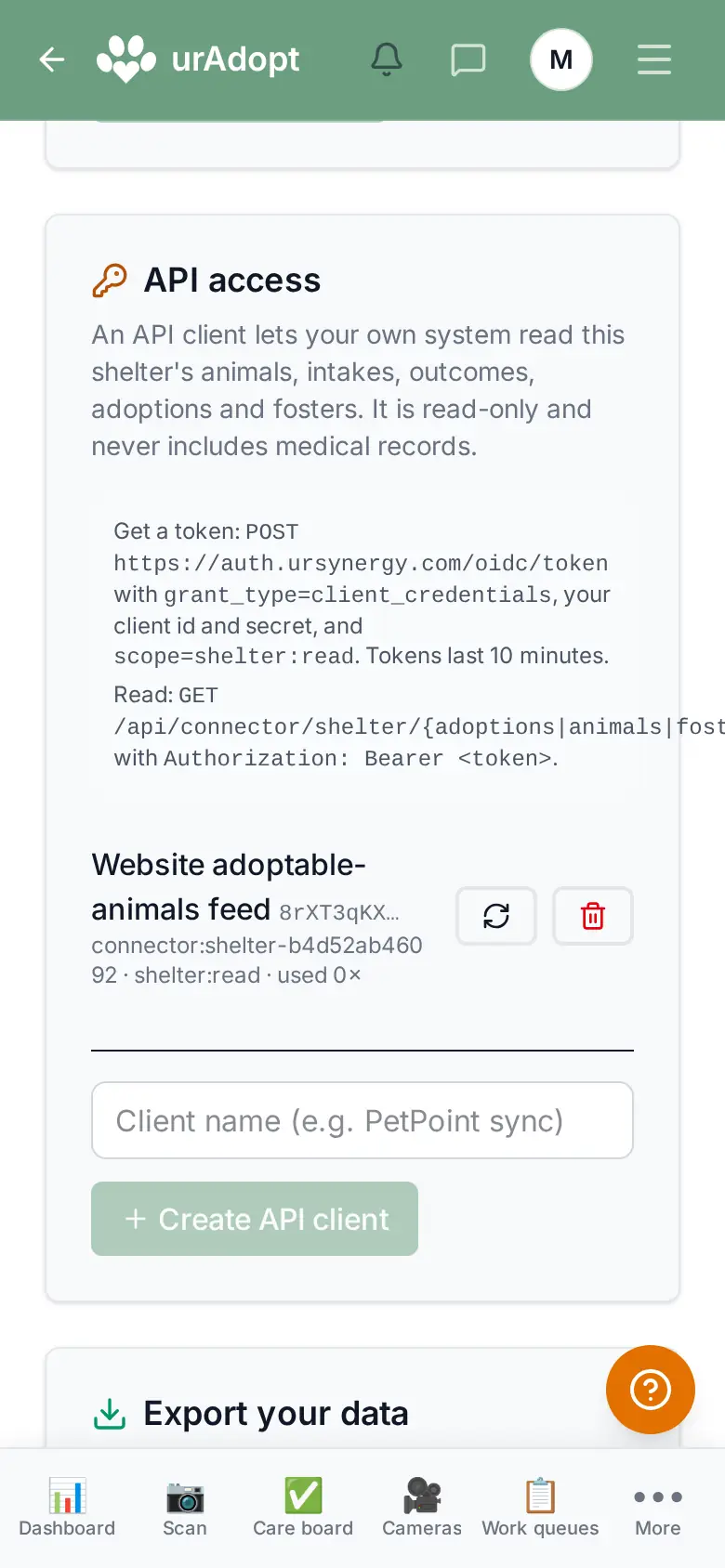
API access settings with a read-only client named Website adoptable-animals feed and buttons to rotate or revoke it.
A read-only API client your shelter creates and can rotate or revoke.
Export your data panel with Download CSV (zip) and Download JSON buttons.
Export as CSV files in a zip, or as JSON.

Adoption workflow

A go-home checklist that includes microchip registration, and other applications for the same animal closed when one adoption completes.
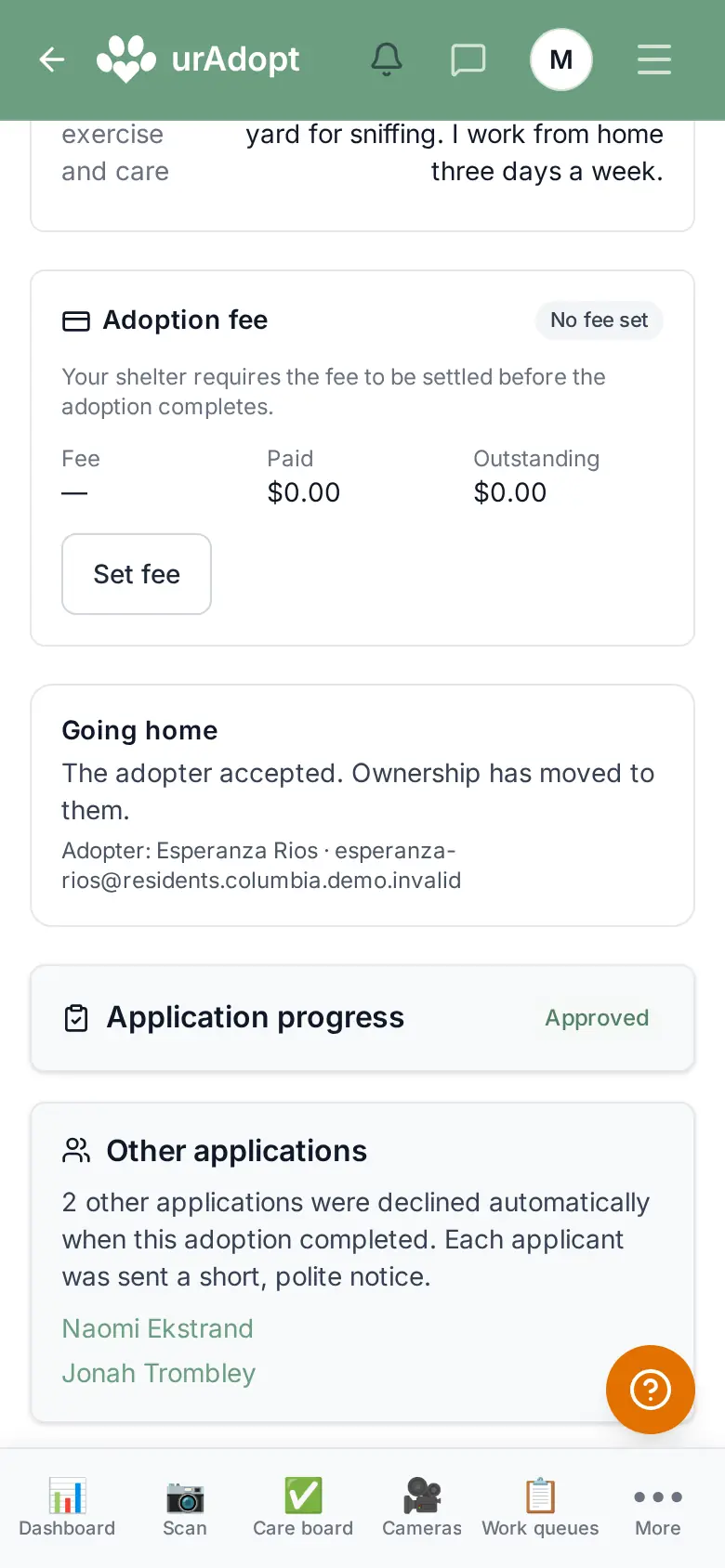
Approved adoption application showing that two other applications, from Naomi Ekstrand and Jonah Trombley, were declined automatically.
When an adoption completes, the other applications are declined and listed here.

Returns

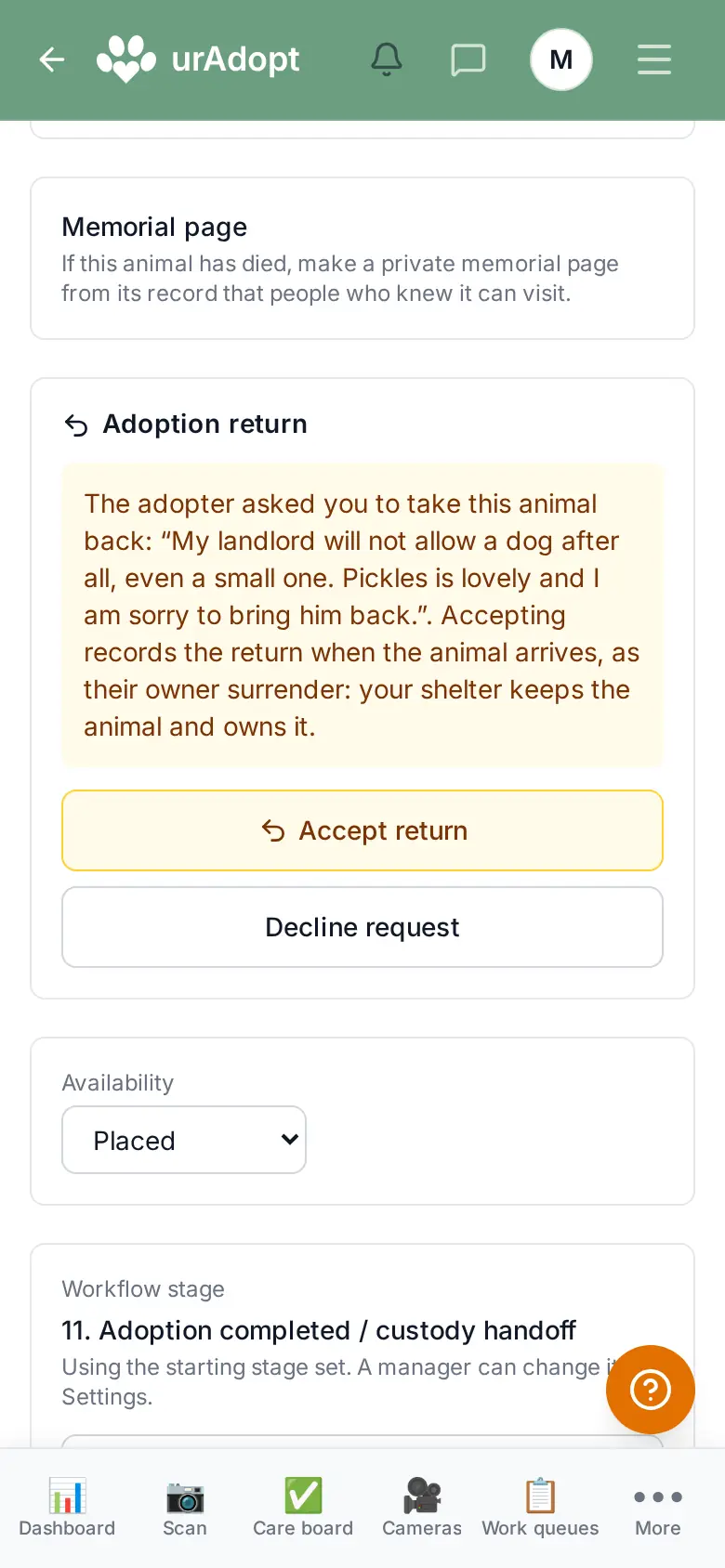
An adopter can ask to return an animal from their own account; the shelter accepts it as an owner surrender.
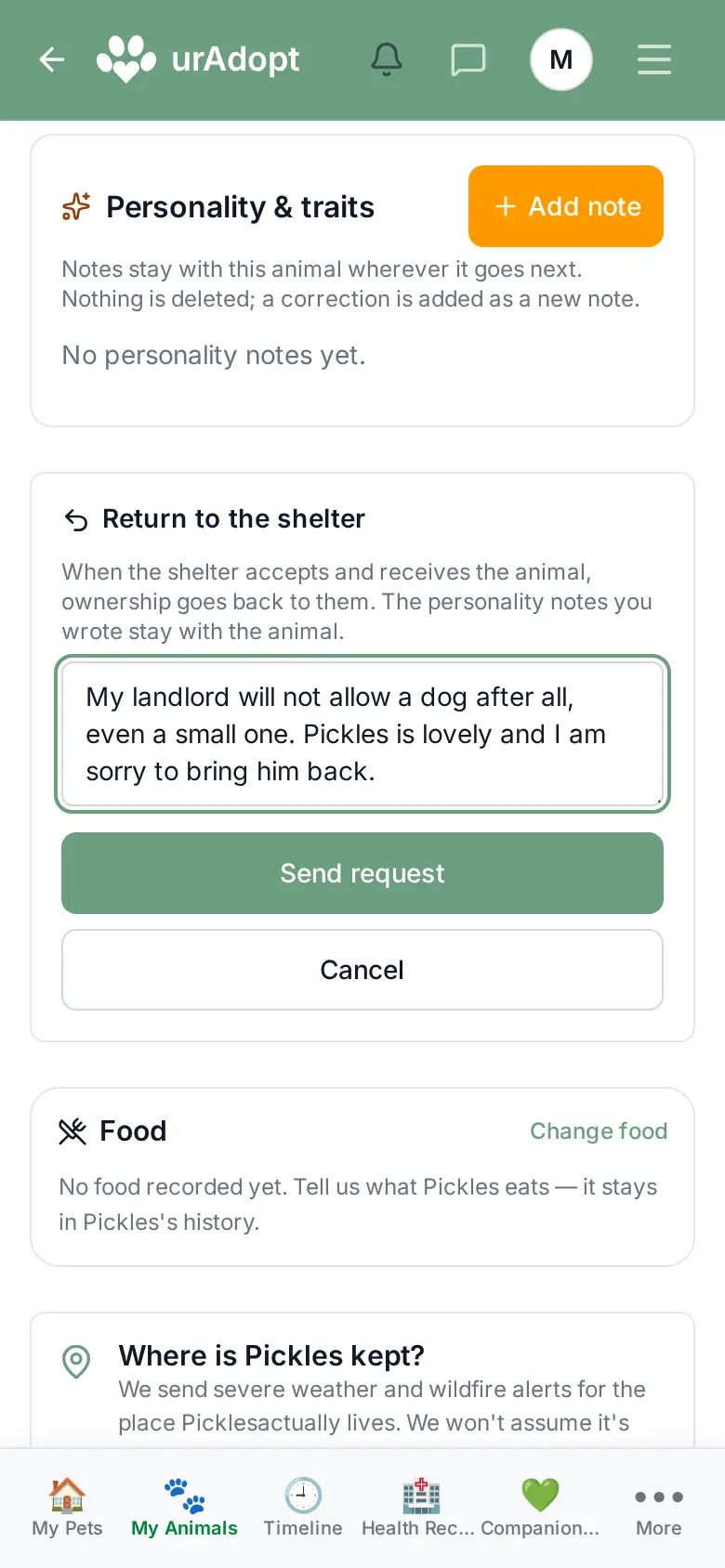
An adopter’s pet page with a Return to the shelter form explaining why they are returning Pickles.
The adopter asks the shelter to take the animal back.
Shelter view of Pickles with the adopter’s return request quoted and Accept return and Decline request buttons.
The shelter sees the request and accepts or declines it.

Personality notes

Staff in every role add notes and traits that stay with the animal wherever it goes next.
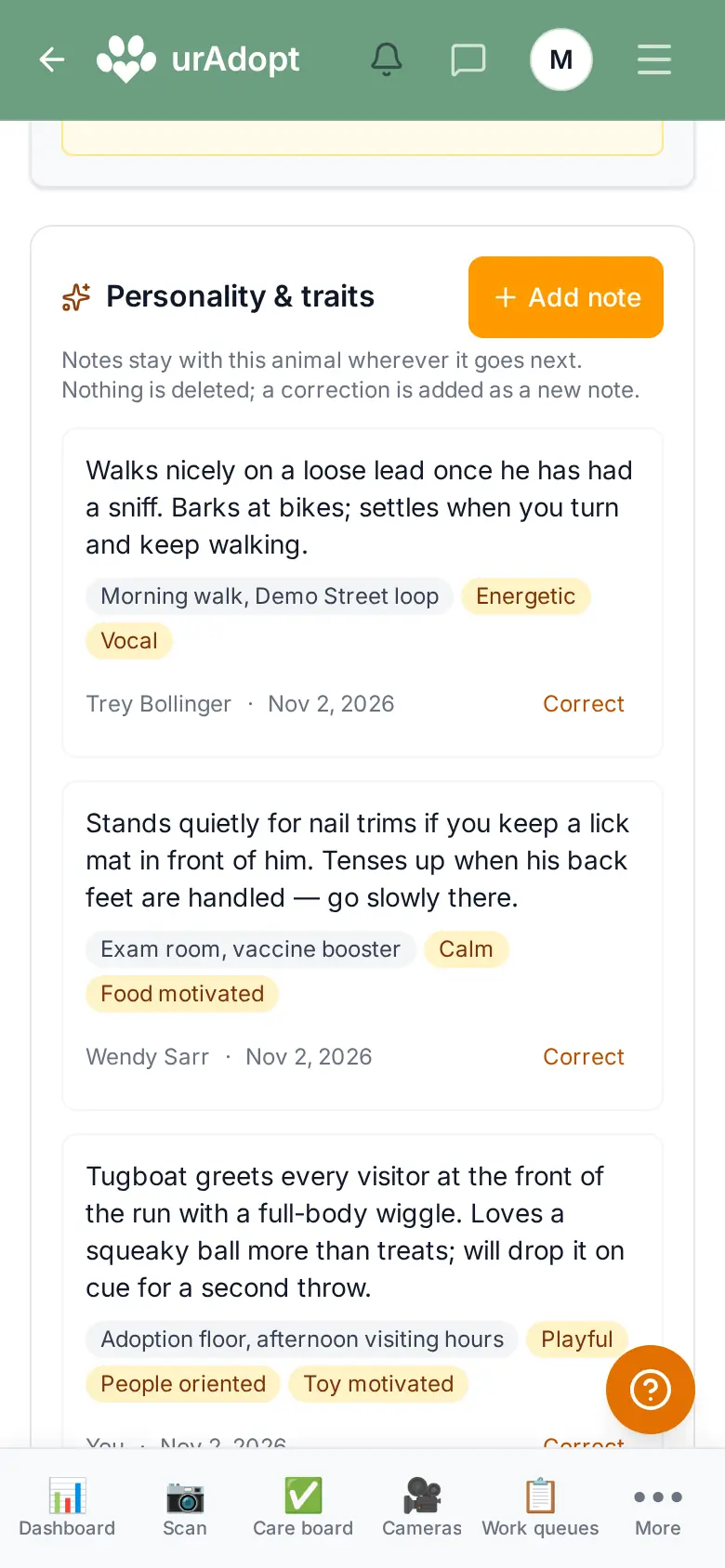
Personality and traits panel for Tugboat with notes from three staff members tagged energetic, calm, food motivated and playful.
Notes from different staff, each with its context and trait tags.

Bulk intake

Take in several animals at once, from a spreadsheet or typed in; check the rows first, then take them in.
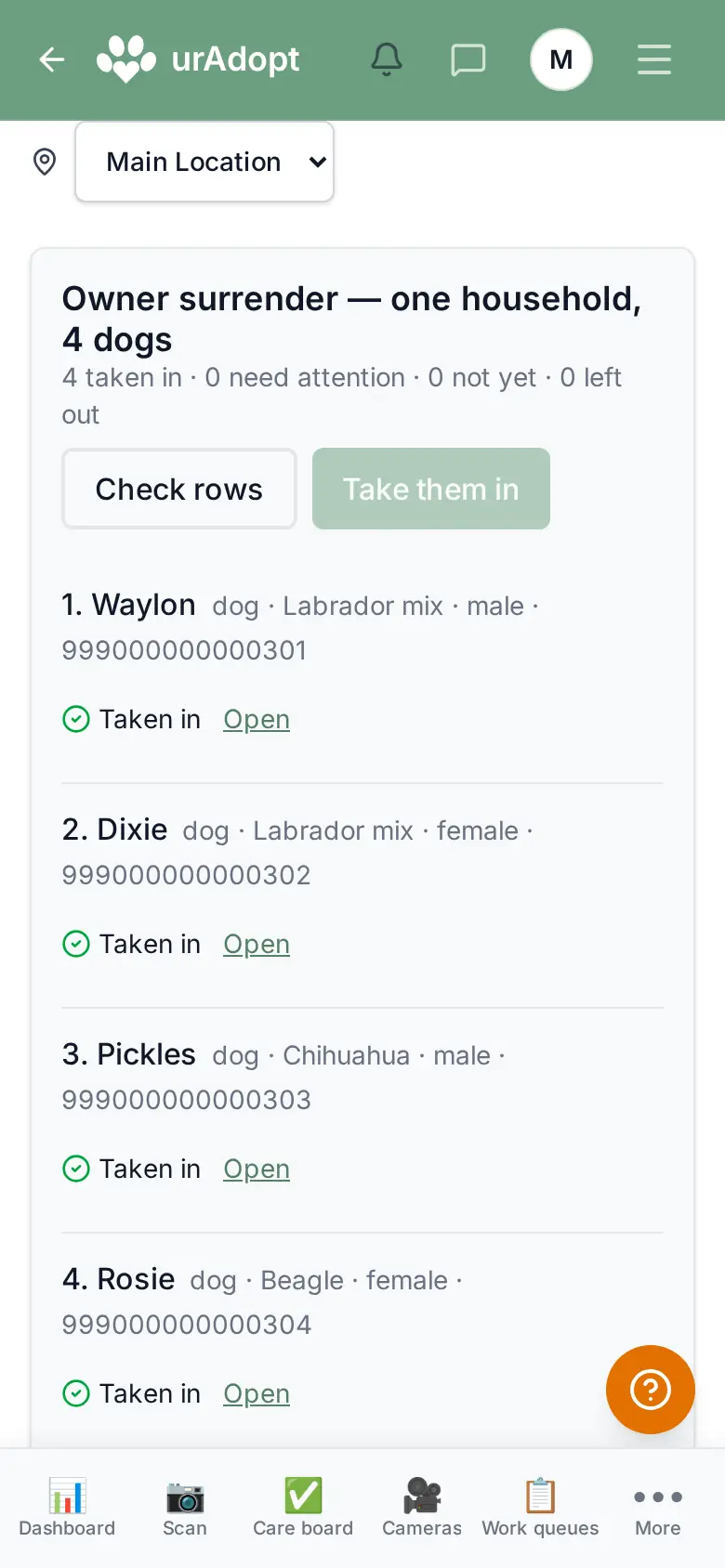
Bulk intake batch of four dogs, Waylon, Dixie, Pickles and Rosie, each marked Taken in with a link to its record.
After taking them in, each animal has its own record.

Listing readiness

Before a listing goes live, it shows exactly what is still missing.
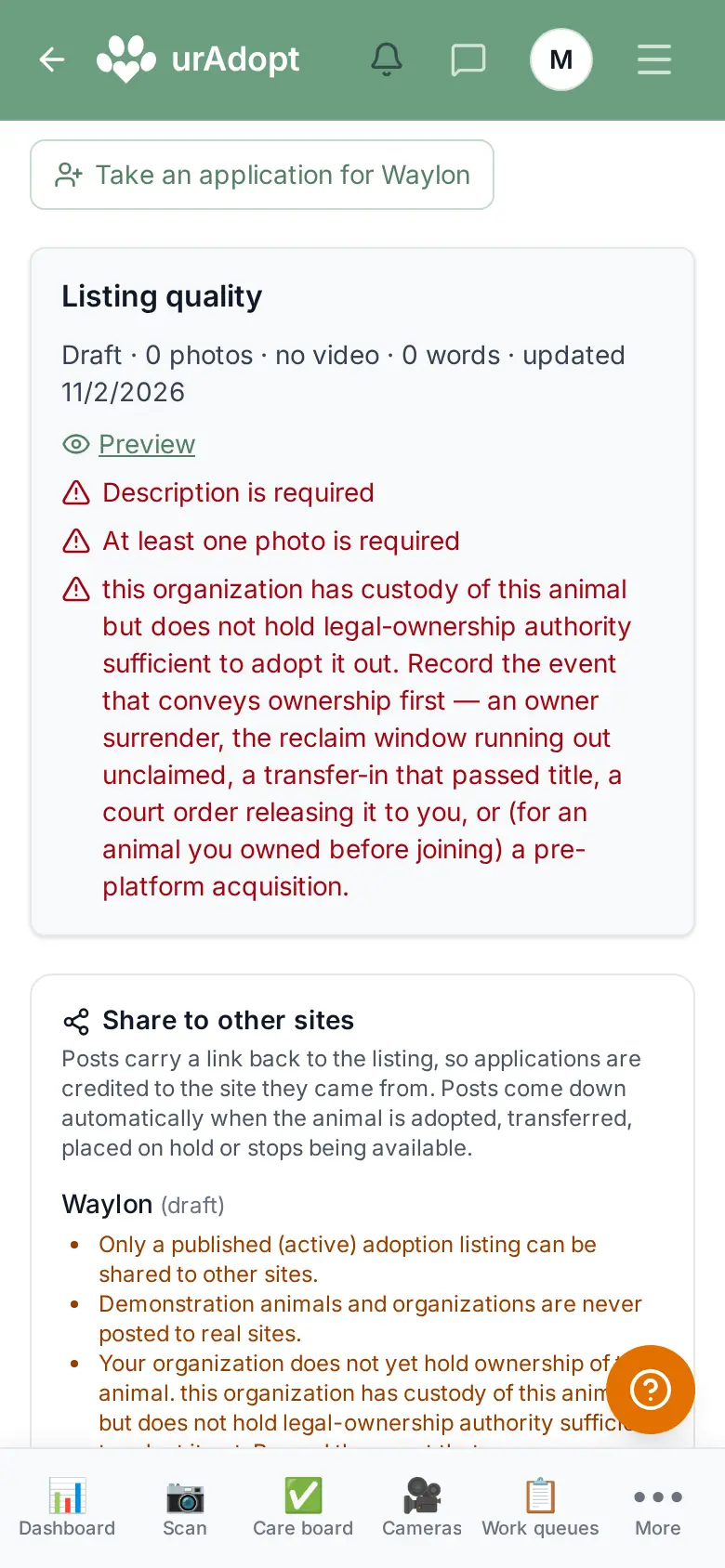
Listing quality panel for Waylon’s draft listing showing that a description, a photo and ownership are still needed.
A draft listing with what blocks it: description, photo and ownership.

Place More Animals in Caring Homes

Join shelters, rescues, and responsible rehomers using urAdopt to find welfare-screened families for every animal in their care.